
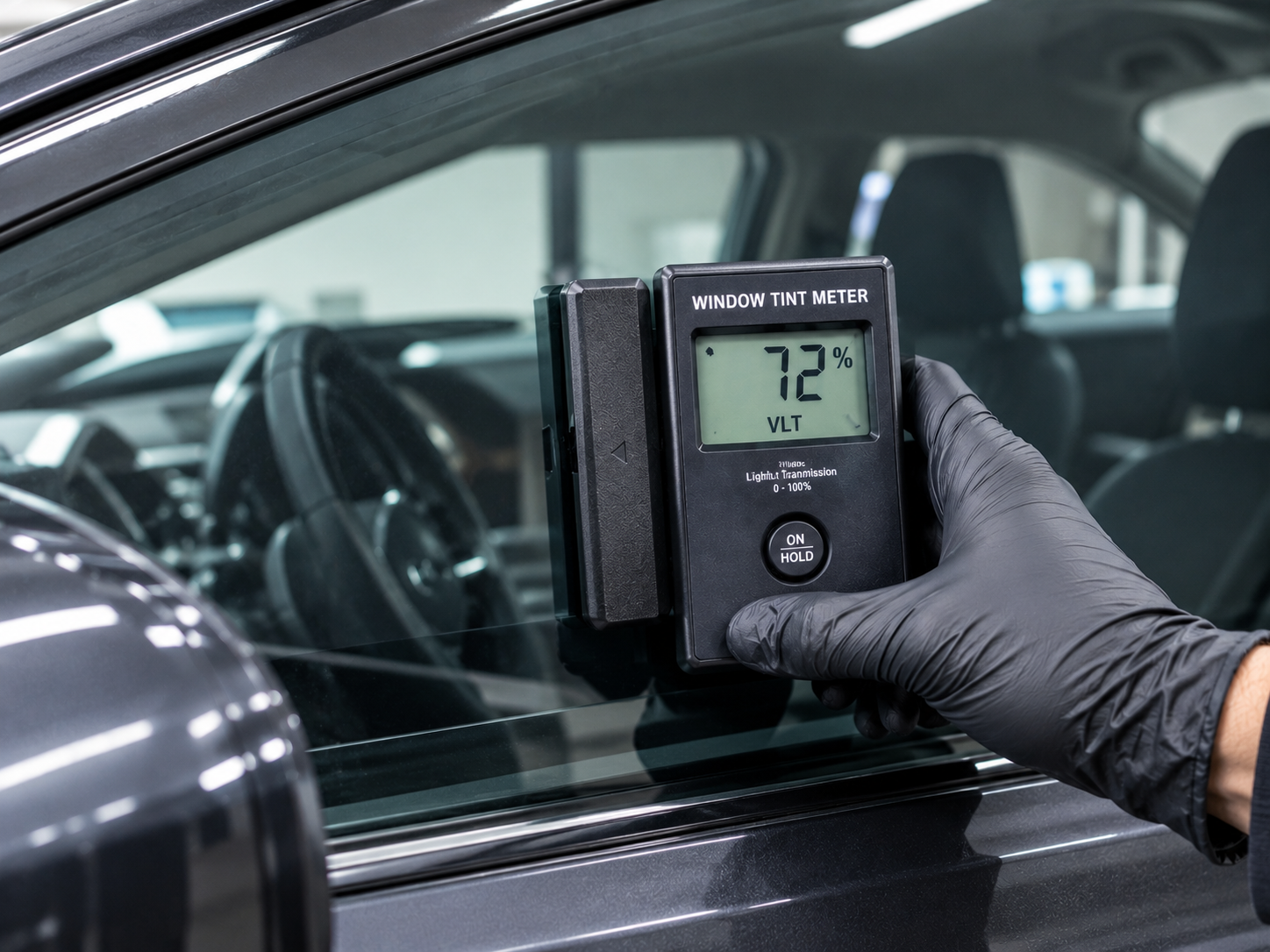
NSW applies stricter light-transmission rules to front side windows than to rear windows, and the main windscreen generally can’t be tinted below the factory shade band at the top. The exact minimum percentages are set by Transport for NSW and can be updated, so rather than quote a number that might be out of date by the time you read this, the most reliable move is to check the current standard directly and have any installer confirm your job meets it.
Here’s why this question comes up so often. Someone buys a used car. Or gets a “mate’s rates” tint job done somewhere cheap. Then months later, a random pull-over turns into a conversation about window darkness nobody wanted to have.
Let’s walk through how the rules are structured, without guessing at figures that need to be current to be useful. For a broader look at how tint fits alongside paint protection and coatings, see Protected Studio’s complete guide to car paint and window protection in Sydney.
The General Shape of the Rules
Across Australian states, including NSW, window tint regulations tend to follow the same broad logic:
- Front side windows (the ones you and the driver look out of most) face the strictest darkness limits, since visibility for other road users and police matters most there
- Rear side windows and the rear windscreen are allowed to be considerably darker, provided the vehicle still has working external side mirrors
- The main windscreen is largely off-limits for aftermarket tint, aside from a shaded strip at the very top, which must stay above where the sun visor sits when lowered
That windscreen rule catches a lot of people out. Tinting the main windscreen area is not something a compliant installer will do, regardless of how dark you’d like it.
Why Front Windows Get Stricter Treatment
Makes sense when you think about it. Police need to see who’s driving. Other drivers need to see you signalling, checking mirrors, all of that. Rear windows get more flexibility because visibility there matters less for road interaction, as long as your external mirrors are doing their job.
What Happens If Your Tint Doesn’t Comply
Getting pulled over with non-compliant tint in NSW can result in a defect notice, sometimes alongside a fine, depending on the circumstances and the officer’s discretion. A defect notice typically requires the film to be fixed within a set timeframe, with a follow-up inspection.
Here’s the part people don’t expect: even tint that was legal when installed can end up non-compliant later. Older film can degrade and darken slightly, and a second-hand car doesn’t come with any guarantee the original tint job was compliant to begin with.
How to Check If Your Current Tint Is Legal
You can’t eyeball this accurately. “Looks about right” isn’t a defence.
A few practical options:
- Check the current official standard directly through Transport for NSW, since exact limits are set by regulation and can change
- Get your tint tested with a light-transmission meter, which most reputable tint studios have on hand
- Factor in factory-tinted glass, since some vehicles come with slightly tinted glass from the manufacturer that already counts toward the total darkness once film is added on top
That last point matters more than people realise. Factory-tinted glass plus aftermarket film can stack up to a combined darkness that’s higher than either alone, even if each individually would have been fine. Worth noting too that legality and UV protection aren’t the same thing. Even legally light rear glass still lets plenty of damaging UV through, which is covered in How Window Tint Protects Your Car’s Interior from Sydney’s Harsh UV Rays.
Getting It Right the First Time
If you’re booking new tint, or fixing an existing non-compliant job, the studio doing the work should:
- Stay current on NSW window tint requirements as part of doing the job properly
- Test and confirm the finished result complies, not just estimate it by eye
- Be upfront if a requested darkness isn’t compliant for a particular window, rather than installing it anyway
- Provide documentation or a receipt you can reference if you’re ever questioned
This matters just as much whether you’re based in Alexandria, driving in from Redfern or Waterloo, or coming from further south around Mascot and Eastlakes. The rules don’t change by suburb. The installer’s honesty about them does. Our car window tinting service is built around compliance first, darkness second. If you’re after the fuller picture on why compliant tint is still worth it, 7 Benefits of Car Window Tint Every Sydney Driver Should Know covers that.
What About Factory-Tinted Rear Glass?
A common point of confusion. Many SUVs and some sedans come from the factory with darker rear glass already, which is legal as manufactured. Adding aftermarket film on top is generally fine for rear windows, given rear glass has more flexibility than front glass anyway, but it’s worth understanding the difference when someone asks why your rear windows look darker than your mate’s identical model. If cost is on your mind too, How Much Does Ceramic Window Tinting Cost in Sydney? breaks that down separately.
Frequently Asked Questions
Can I legally tint my entire windscreen in NSW?
No. Only a shaded strip at the top is generally permitted, and it must not extend below where the sun visor sits when lowered. The rest of the windscreen is not able to be tinted.
What’s the legal darkness limit for front side windows in NSW?
There is a specific minimum light-transmission requirement, set by Transport for NSW. Because these figures are set by regulation and can be updated, check the current official standard directly or ask your installer to confirm compliance rather than relying on a number that may be out of date.
Do rear windows have a legal minimum darkness in NSW?
Rear windows are generally allowed to be considerably darker than front windows, provided the vehicle retains functioning external side mirrors. Confirm the exact current requirement with an official source or your installer.
Can I get fined for tint that was legal when I bought the car?
Yes, non-compliance is generally assessed at the time you’re inspected, regardless of when the tint was installed or by whom.
How do I know if my tint is already too dark?
A light-transmission meter test from a professional is the only reliable way to know for certain. Visual estimation isn’t accurate enough to rely on.
Ready to take the next step? Here is what you should do next: get your current tint checked, or book a fully compliant install, with Protected Studio in Alexandria. Get a Free Quote