
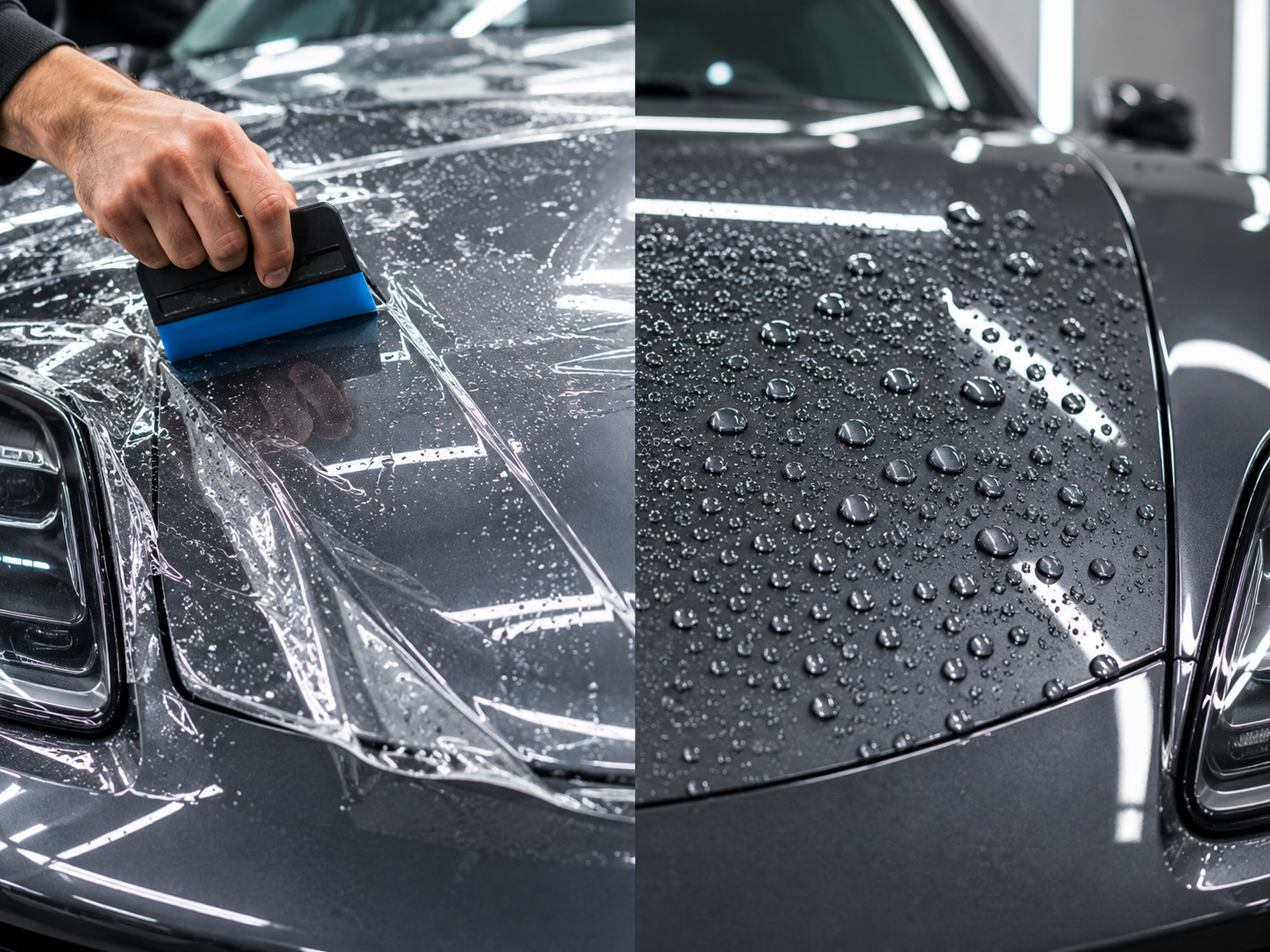
If you can only choose one right now, paint protection film is the better pick for impact protection (stone chips, scratches), while ceramic coating is the better pick for gloss and easier washing. Most Sydney drivers who ask this question are actually choosing where to start, not choosing forever, since many end up with both over time.
Still, that’s a genuinely confusing decision when you’re standing in a studio being shown swatches of invisible film next to bottles of liquid coating that also claim to “protect” your paint.
Let’s make the decision easier.
What Each One Actually Does
These two get bundled together constantly in marketing. They’re solving different problems.
Paint protection film (PPF) is a physical layer. A thick, clear, self-healing polyurethane film applied directly to the paint. It physically absorbs impact: stone chips, light scratches, road debris.
Ceramic coating is a chemical treatment. A liquid that bonds to the clear coat, adding gloss, hydrophobic water-beading, and a layer of chemical resistance against bird droppings, tree sap, and UV oxidation.
One is armour. The other is a finish. Neither one does the other’s job particularly well.
Where PPF Wins
- Genuine impact protection against stone chips and road debris, which ceramic coating simply can’t offer
- Self-healing properties on light scratches and swirl marks, so minor marks can disappear with heat
- Best suited to high-impact zones: bonnet, front bumper, mirrors, leading edges
If you drive a lot of motorway kilometres, especially anywhere with loose gravel or ongoing roadworks, around the M5 or out toward the airport near Mascot, PPF is doing a job ceramic coating physically cannot.
Where Ceramic Coating Wins
- Noticeably deeper gloss and reflection straight after application
- Water beads and rolls off instead of sitting and drying into spots
- Washing becomes genuinely easier, dirt and grime release faster
- Lower upfront cost than full-vehicle PPF
If your priority is presentation and easier upkeep rather than chip protection, especially for a car that’s mostly garaged or low-mileage, ceramic coating often makes more sense as the starting point.
What About Graphene Coating?
Worth a quick mention since it comes up in the same conversation. Graphene coating is a newer evolution of ceramic coating technology, generally offering similar benefits with some added durability and heat resistance. If you’re weighing that option specifically, our Paint Protection Film vs Graphene Coating guide covers that exact comparison in more depth.
So, Which Should You Actually Choose First?
New car, keeping it long term, want maximum protection: PPF first on high-impact panels, coating added afterward. We’ve covered the correct order for combining both in our PPF before graphene coating guide, and the same sequencing logic applies with standard ceramic coating too.
Daily driver, budget-conscious, want an easy win: Ceramic coating alone covers most of what people actually care about day to day, shine and easy cleaning, without the higher cost of full-body film.
Garaged weekend car, low mileage, presentation matters most: Ceramic coating is usually sufficient, since impact risk is low and gloss is the priority.
High-mileage commuter, lots of highway driving: PPF on the front end at minimum, even if coating gets added to the rest of the car later.
A Quick Way to Decide
Ask yourself three questions.
- Am I more worried about chips and scratches, or about shine and easy washing?
- Is this car doing serious highway kilometres, or mostly short local trips?
- Is my budget covering one service now, with the other added later?
Whatever the answers, our Paint Protection Film and Ceramic Coating pages break down exactly what’s included with each, so you can compare properly rather than guessing from a brochure. If price is the deciding factor, The Complete Cost Guide to PPF, Graphene Coating and Window Tint in Sydney lays out real numbers for each.
Why This Decision Matters More in Sydney
Sydney conditions push both products harder than milder climates. Strong, sustained UV wears down lower-grade ceramic coatings faster, while motorway debris and loose stone chips are a genuine daily risk for anyone commuting through areas like Alexandria, Mascot, or out toward the M5. Drivers parked outdoors around Rosebery, Zetland, and Waterloo also deal with more airborne contaminants, bird activity and tree sap, which is exactly what ceramic coating is built to shrug off. If you’d rather not choose between them at all, our Car Protection Packages bundle both together at a better combined price than booking each separately.
Frequently Asked Questions
Can I get both PPF and ceramic coating on the same car?
Yes, and many owners do. PPF typically goes on first, directly onto prepped paint, with ceramic or graphene coating applied over the top of both the film and any remaining exposed paint.
Is ceramic coating a waste of money if I already have PPF?
No. Coating applied over PPF still adds gloss and water-beading, and protects the film itself from UV and contamination, which can extend how long the film looks good.
Which one is more expensive?
Full-vehicle PPF is generally the larger investment, given the material and labour involved. Ceramic coating alone is typically more affordable, which is part of why it’s a common starting point for budget-conscious owners.
Does ceramic coating stop stone chips?
No. Ceramic coating is a thin chemical layer and doesn’t provide meaningful impact protection. For chip protection, PPF is the correct product.
Ready to take the next step? Here is what you should do next: tell the Protected Studio team what you’re actually trying to solve, chips, shine, or both, and we’ll recommend the right starting point for your car and budget. Get a Free Quote